Courage, Culture & Care: Reflections From the AISA Conference 2025 in Kigali
An Epic Experience in Cultural Humility, Teen Resilience, and Navigating School-Wide Crises
Lina Paumgarten
01.12.2025
When I tell you that my AISA (Association of International Schools in Africa) 2025 conference journey started with a plot twist - I’m not even exaggerating. Arriving at the airport in Vienna, Austria, heading to Kigali, Rwanda, I realized I had completely lost my voice. Gone. Not a whisper. And in just a couple of days, I would be delivering three workshops in three days—the first two being 4-hour deep dives. Apart from that small, mildly catastrophic detail, everything was perfectly fine. 🤭
A Brief Introduction to Rwanda
If you haven’t been to Kigali, it’s a place that stays with you. Rwanda is often introduced through the narrow lens of Western literature—Joseph Conrad’s Heart of Darkness being a memorable example—but those old narratives could not be further from the Rwanda of today.
Modern Kigali is vibrant, clean, safe, and astonishingly welcoming. The hills fold into each other like soft green waves, the city hums with innovation, and the people carry a warmth and resilience that redefine every assumption you might arrive with. It is a place of remarkable healing and forward movement, a reminder that countries—like people—are more than the stories once told about them.
The Honor of Presenting at AISA
At the conference, I had the privilege of presenting on behalf of Linden Global Learning and Support. Over three sessions, we explored themes that sit at the heart of international school life today:
Cultural humility
Teen resilience
Crisis navigation and prevention
Each workshop offered its own energy, its own conversations, and its own powerful moments. And I’d love to share some of the key takeaways with you.
Navigating School-Wide Crises with Cultural Humility
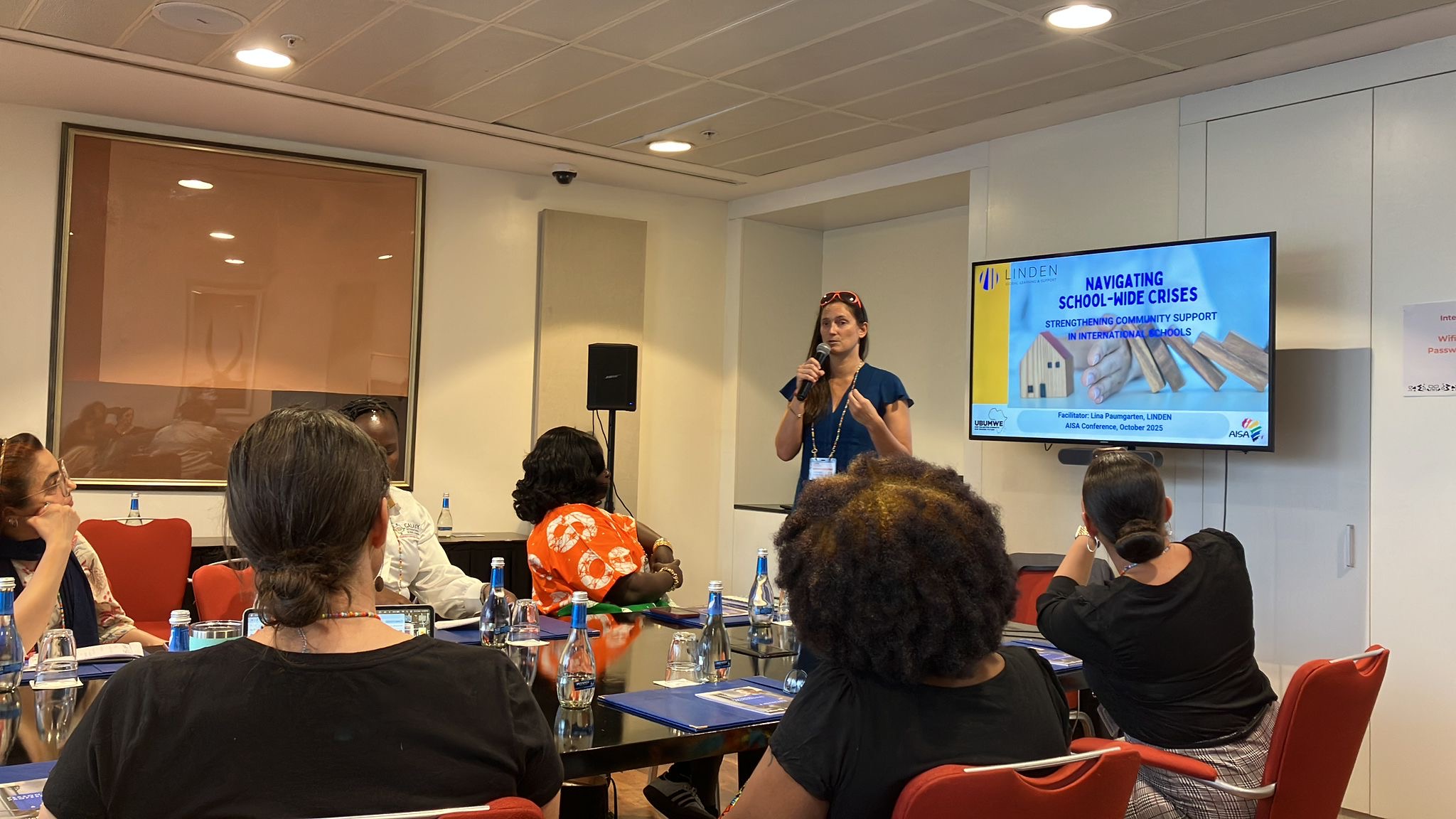
One thing this workshop always reminds me of is that you never truly know who is in the room or what they’ve lived through. Talking about suicide prevention and crisis response isn’t theoretical—it's personal, emotional, and deeply human. Even the most experienced educators will say: nothing prepares you for the real thing.
In Kigali, we focused on what truly matters when a school community faces a crisis.
Key Takeaways
Crisis readiness starts long before the crisis. Clear systems, role clarity, communication plans, and postvention structures matter.
Psychological First Aid is the backbone of response. Safety first, listen well, connect students to support, and help them regain a sense of control.
Culture shapes everything. Crisis response must honor local beliefs, languages, norms, and family expectations.
Youth suicide prevention requires directness and compassion. We practiced the ICARE model—Identify the warning signs, Connect with empathy, Ask directly about suicide, Reduce and remove the risk, Escort to next level of help.
Crises ripple through a community. We mapped Circles of Impact to plan layered communication and support.
Responder well-being matters. Burnout, secondary trauma, and boundaries came up often—caring for students requires caring for ourselves.
Cultural responsiveness strengthens systems. Humility and curiosity are more effective than assumptions.
A powerful closing insight from the group: crisis navigation is a collective act of courage.
Building Teen Resilience in International Schools
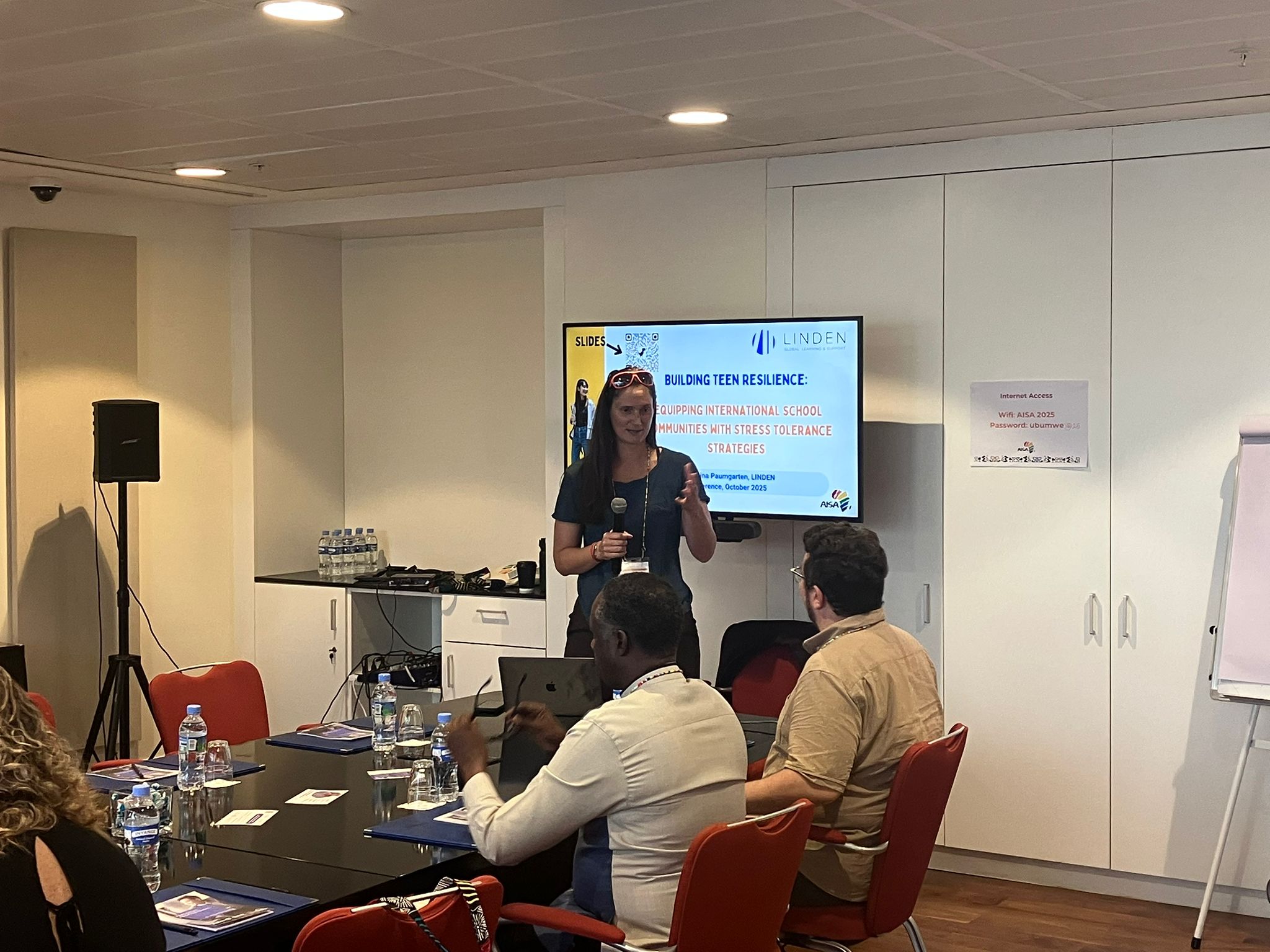
My second session at AISA focused on one of the most urgent needs in schools today: helping teens build stress tolerance and emotional resilience. International school students carry unique pressures—academic expectations, transitions, identity shifts, and the weight of global events—so our goal was to give educators practical, culturally grounded tools to support them.
Key Takeaways
Teen stress is complex and layered. Academic pressure, social dynamics, mobility, and world events all contribute—and culture shapes how stress is expressed and responded to.
Understanding anxiety helps us respond better. We explored how anxiety works in the brain and which strategies are truly effective (and which aren’t).
Early signs matter. Subtle shifts—sleep issues, withdrawal, irritability, perfectionism—often show up before bigger concerns.
Resilience can be taught. Mindfulness, reframing, problem-solving, goal-setting, and consistent routines all help teens regulate stress and build confidence.
Culture influences coping. Strategies must be adapted to family norms, language, and beliefs about mental health.
Families are essential partners. When parents/guardians understand stress and model healthy coping, students thrive.
A shared toolbox strengthens the whole school. Participants collaborated to create practical strategies for classrooms, counseling sessions, and at-home support.
This workshop had a wonderful energy—curiosity, honesty, and a shared desire to lift up adolescents in ways that honor who they are and where they come from.
Cultural Humility (vs Competence) in International Schools
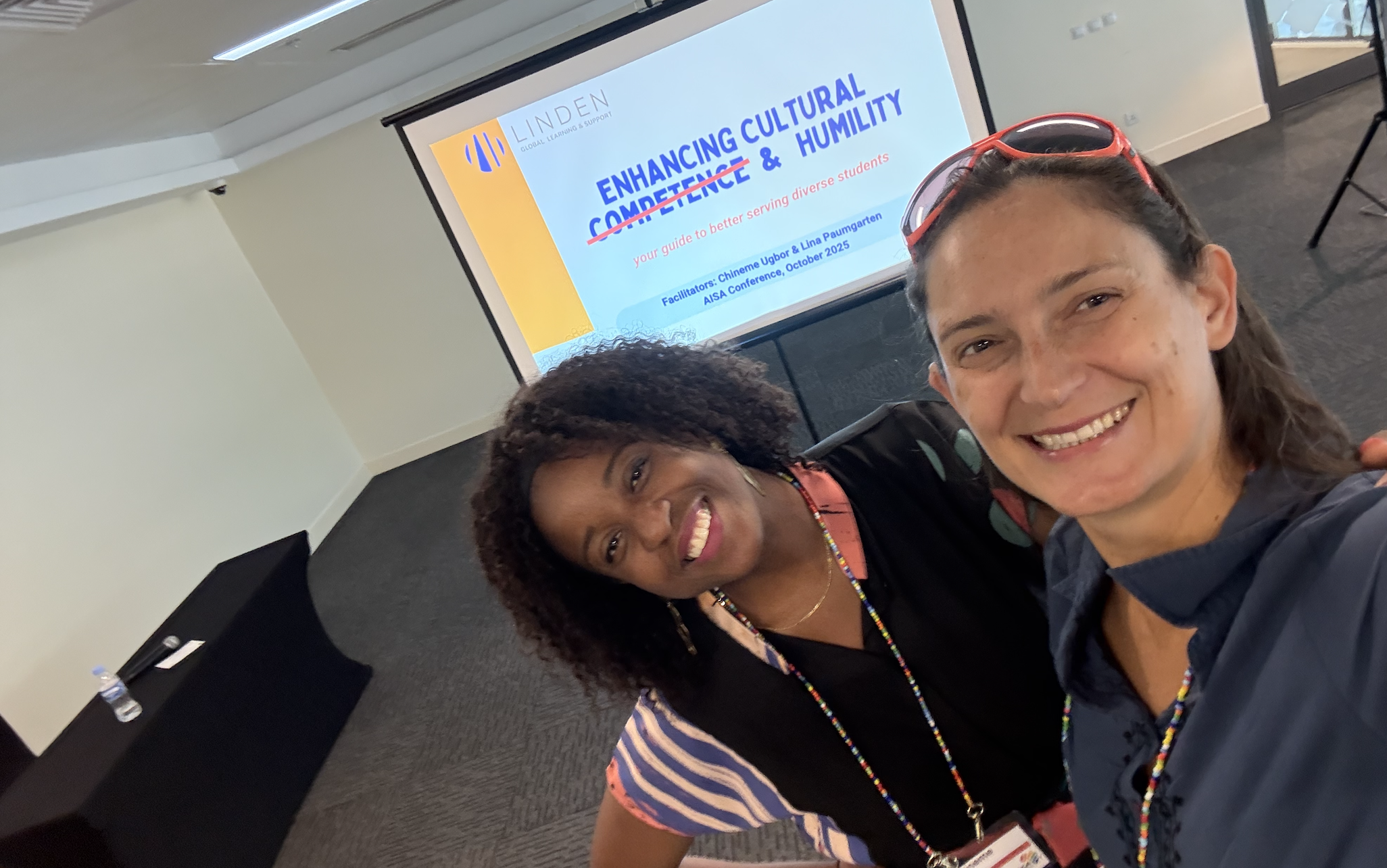
My final session (together with the wonderful Chi, co-founder of Linden) at AISA 2025 centered on cultural humility—a mindset and practice that feels especially vital in international schools across Africa. Unlike cultural competence (which suggests mastery), cultural humility asks us to stay open, curious, reflective, and aware of the limits of our own knowledge.
Key Takeaways
Cultural humility is ongoing. It’s not something we “achieve”; it’s a continuous practice of self-reflection, curiosity, and awareness of our blind spots.
Assumptions are inevitable—and adjustable. Participants explored moments when their cultural assumptions were incomplete, and how quickly humility can strengthen relationships.
Five building blocks guide the work: recognizing our own ignorance, practicing critical literacy, embracing ambiguity, adapting intentionally, and finding purpose in connection.
Practical strategies matter. Tools like reflective checklists, mindful communication, and culturally sensitive partnership-building help educators connect meaningfully with students and families.
Reflection is powerful. A guided exercise invited participants to examine how identity, power, and past experiences shape their interactions in school—many shared that this was the most impactful moment of the session.
A culture of humility lifts the whole community. When leaders model curiosity and openness, classrooms become safer, conversations deepen, and students feel seen.
This workshop closed the conference for me on a grounded, hopeful note—reminding all of us that cultural humility isn’t a skillset, but a way of being with one another.
The Thread That Connects It All
As I flew home—with my voice slowly returning and my heart incredibly full—I kept thinking about what connected all three workshops. Whether we were talking about crisis response, teen resilience, or cultural humility, the throughline was unmistakable: schools thrive when we lead with humanity. Kigali offered the perfect backdrop for that reminder—resilient, warm, forward-moving, and grounded in community. I left AISA 2025 deeply grateful for the conversations, the courage in the room, and the educators who show up every day with open minds and open hearts. These are the moments that keep shaping my work and my purpose, and I’m already looking forward to the next time we come together to learn, reflect, and grow.